

At CTL, Mendenhall is designing systems that don’t just scale—they serve. His goal? Technology that lifts up learners, lightens the load for teachers, and lasts.
INTERVIEW | by Victor Rivero

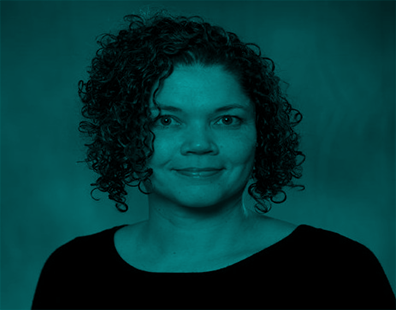
With deep roots in education and an extensive background in edtech innovation, Jason Mendenhall brings both strategic vision and personal purpose to his role as CEO of CTL. From leading product teams at MIND Research Institute and NWEA to launching award-winning technologies and scaling multi-million dollar portfolios, Jason’s mission has always centered on improving learning outcomes through tools that empower both students and teachers.
He now leads CTL—an OEM and B Corporation with a growing suite of lifecycle solutions and forward-looking devices designed to meet the evolving needs of schools, educators, and learners alike.
What prompted you to get into education, particularly edtech, way back when? What was the spark, the prompt, the original purpose?
What originally sparked my interest in education was a set of amazing teachers who had a dramatic influence on my life. I moved around a lot as a child, and viewed teachers as a safe space. As I got older, I wanted to give back, so I served as an English and biology teacher for nearly a decade. It’s an interesting combination that piqued my interest in science and, as a corollary, technology.
Throughout this experience, I realized that our systems of learning and teaching could be better. With this spark, I was inspired to move into EdTech, and I’ve been working to improve software, hardware, and curriculum for teachers and learners ever since. The lens for everything I do is simply this: “How do we make learning more effective for each learner, and each educator, every day?”
‘“The lens for everything I do is simply this: How do we make learning more effective for each learner, and each educator, every day?”’
What past highlight informs your current approach?
The longer I’m in edtech, the more convinced I am that solving customer problems with compelling solutions is more critical than just focusing on the technology itself. At CTL, my goal is to continually invest in diversifying our portfolio to deliver greater customer value. Companies that fail to do this risk stagnation. In today’s tech-driven landscape, edtech providers must constantly innovate to add that value.
In CTL’s case, we’re a hardware manufacturer, also known for our services. We’re now doubling down by expanding our product and service solution portfolio to solve customer challenges.
How is your role at CTL perfect for you and them at this time and place?
I’ve spent most of my career growing organizations and right now, that’s the challenge at CTL—how do we grow? I love working with dynamic organizations and helping them bring together the talent, the capital, and the processes to scale. I get a lot of energy out of doing that.
With my experience in the EdTech market, I feel I am bringing a well-rounded knowledge of technology, curriculum, assessment, and instruction that enables me to think about the value we bring to our customers’ environment in an expanded way.
I’m also excited to help CTL scale beyond the edtech market. We’re looking to scale up our solutions in commercial markets as well, particularly healthcare, hospitality, retail, digital signage, small and medium businesses (SMB), and others.
On CTL’s Acquisition of 3R Technology
CTL recently acquired a recycling company, 3R Technology. Why did CTL, an OEM, make this move?
This move is a key piece of our strategy to do two things: evolve into a comprehensive technology lifecycle (CTL) organization and fulfill our mission as the only Chromebook manufacturer certified as a B Corporation.
We can now take back used Chromebooks, laptops, MacBooks, iPads, and other devices. We have the advanced, certified capability to destroy sensitive data and recycle or refurbish these devices, and potentially give them a second life back in the market.
As a B Corporation, the acquisition of 3R enhances our recycling capabilities with R2v3 and NAID AAA data destruction services. It ensures our customers’ data stays protected—and that devices are responsibly handled.
What benefits will this expanded vision bring to education technology buyers?

For CTL customers, this is a win-win expansion of capability to our lifecycle services.
Few schools have a formal IT asset disposition (ITAD) strategy. Equipment is piling up in back rooms and wasting resources. CTL will now offer ITAD services nationwide. Schools can free up space and get paid to do it—with credit toward new devices or cash.
We’ll also offer packing, shipping, and logistics services to ease the burden on IT departments.
On LTE Chromebooks and What’s Ahead
CTL has been a leader in LTE-enabled Chromebooks. What’s next on the roadmap—5G connectivity? Product enhancements?
The primary value for connected Chromebooks is learning anytime, anywhere. LTE-enabled devices are vital for students without reliable home Wi-Fi—home-insecure kids, those with health issues, or students experiencing chronic absenteeism.
Some schools are even building private LTE networks. We’ve supported programs in Tukwila, Washington, and Murray City, Utah—enabling students to learn at home regardless of connection status.
We’re also hearing about emergency services using these networks for enhanced real-time visibility in school safety situations.
This summer, CTL will release an updated LTE-enabled, rugged student device. Once approved, we’ll follow up with a 5G-enabled version.
What other new products can we expect from CTL in the coming months?
We’re launching a new student Chromebook with a 12.2” screen—offering better visibility in a compact, rugged form.
We’re also introducing the CTL Chromebox OPS device, great for digital signage or powering in-class touchscreen systems.
And while not new, Chromebook Plus devices are gaining traction. They’re secure, affordable, and loaded with AI teaching tools, making them a smart choice for today’s educators.
On the Future of EdTech and AI
What is your approach to tariffs and international manufacturing uncertainty?
This is a dynamic environment. We’re working with suppliers to diversify manufacturing across multiple countries. That way, CTL won’t be reliant on a single country of origin.
Currently, Chromebooks have a tariff carve-out. We’re shipping as much as we can while we can, and the diversification we’re doing now will make us more resilient going forward.
What are your thoughts on AI’s impact on education?

AI is here to stay. Like calculators or spell check, it will shift how students learn. Instead of rote memorization, we’ll see a greater focus on critical thinking and sourcing reliable information.
I’m especially interested in ethical AI—helping students learn how to use it responsibly while still creating original work. Google’s Gemini for Education is a great example of this balance.
At the end of the day, technology should amplify—not replace—the expertise of teachers. I believe our greatest gains will come from combining powerful tools with human guidance and imagination.
—
Victor Rivero is the Editor-in-Chief of EdTech Digest. Write to: victor@edtechdigest.com






1 Comments
andrea
Really appreciate Jason’s balanced view that technology should amplify, not replace, educators. That mindset is essential right now, especially as AI tools become more common in classrooms. One area we’ve seen this philosophy come to life is through experiential EdTech platforms like Startupwars.com, which allow students to learn by running their own simulated startups.